Evidence & Ethics: Blue Jays Explore Forensic Science

Taught by longtime Jesuit educator Amy Tassin, a biology teacher and moderator of the Medical Society, Introduction to Forensic Science is a one-semester elective open to juniors and seniors that blends laboratory rigor, chain-of-custody practice, and the ethical responsibilities that accompany work in the forensic sciences. The course is designed to cultivate careful observation, data-driven reasoning, and the disciplined attention to persons and evidence.
Over the fall semester, students moved through a broad suite of topics essential to modern forensics: crime-scene investigation, types and collection of evidence, hair analysis, document analysis (including forgery and counterfeiting), DNA and blood evidence, ballistics, imprints, and death investigation. Classroom work emphasizes scientific methodology and clear reporting, teaching students not only to collect and analyze evidence but also to document their findings so they can withstand scrutiny in real investigative and legal contexts.
A highlight of the course are the crime scene analysis projects. As part of their elective, Jays recreated real-life crime scenes through dioramas complete with labeled evidence, scene reports, and investigation notes. Each project was accompanied by a presentation that broke down the case, identified key evidence, and explained how the investigative team used forensic techniques learned in class to reach conclusions. These capstone projects require students to synthesize laboratory skills, written documentation, and oral presentation.
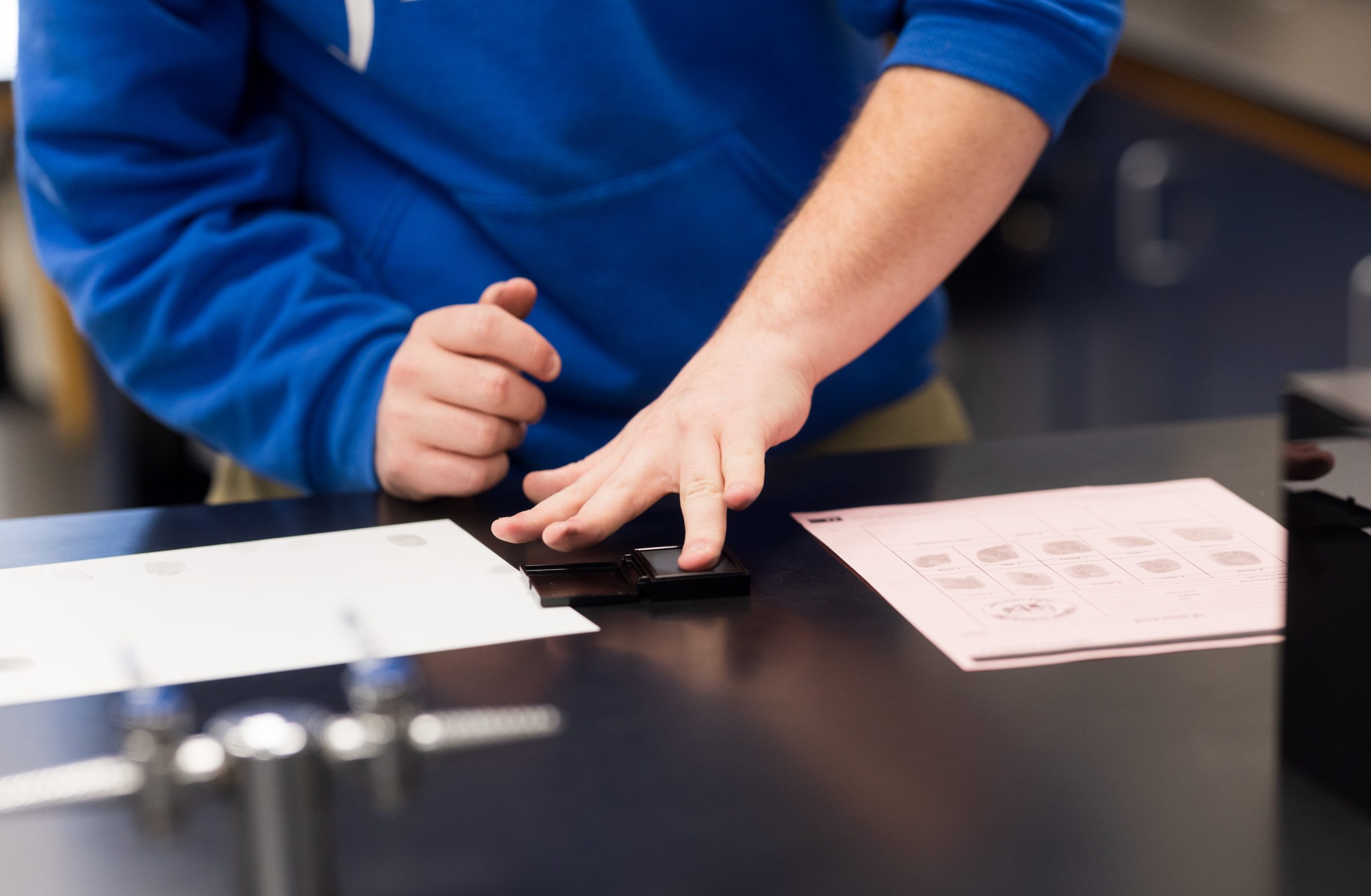

In class, students pursue clear, measurable learning goals. For example, a fingerprint unit aims for students to understand the biological basis and forensic value of fingerprints and to properly collect, classify, and analyze fingerprints using standard forensic techniques. To meet that goal students create their own 10-Print cards, learn to identify the three primary fingerprint patterns (loops, whorls, and arches), and subclassify prints. They practice developing latent prints using a variety of reagents and methods — ninhydrin, iodine fuming, cyanoacrylate (superglue) fuming, and traditional powder dusting — and apply those skills in simulated casework to match crime-scene prints to suspects.
A field visit to the Jefferson Parish Crime Lab in the fall allowed students to hear firsthand from the professionals who run each unit. Junior Patrick Naccari and seniors Seth Neo, Jack Hubbard, Clark Nolan, and Aidan McKoin saw evidence processing and laboratory workflows firsthand. This experience brought classroom lessons into sharp relief and reinforced the ethical and civic responsibilities of forensic work — stewardship of evidence, respect for victims, and the pursuit of truth.
Formation in the classroom is strengthened by partnerships with local forensic professionals. During the spring semester, seniors Will Berry, Luke Doiron, Beau Matulewski, Jonathan Ray, Andrew Rouselle, Pharaoh Saldana, Micah Sens, and Julien Tullier toured the Forensics Lab — a unit staffed by specialists who analyze evidence from cell phones, computers, tablets, and cameras. The students were struck by the meticulous workstations and by the way scientists balance technical expertise with careful documentation and legal protocols. In the fingerprint lab, students examined a photograph of O. J. Simpson’s palm print and DNA results. The trip also included visits to the ballistics lab, the evidence room, the DNA lab, and the drug analysis lab.
